Why Uttar Pradesh works differently
Most people who have dealt with groundwater approvals elsewhere in India expect to file with the Central Ground Water Authority. In Uttar Pradesh that expectation sends them down the wrong road. The state passed its own law, the Uttar Pradesh Ground Water (Management and Regulation) Act of 2019, and the UP Ground Water Department now runs registration, NOC and monitoring for users inside the state.
So a dyeing unit in Kanpur, a hotel in Lucknow and a housing society in Ghaziabad all answer to the same state department, not to a central desk in Delhi. The rules borrow heavily from national thinking on groundwater, but the forms, the portal and the officers are local. Treating it as a CGWA file with a different letterhead is a common reason applications bounce.
Who has to register
The Act casts a wide net. Commercial, industrial, infrastructure and bulk users drawing groundwater generally need a NOC, while existing users were asked to register their borewells. Drilling agencies also have to be registered before they sink a new bore, which is a detail many factory owners only learn when their driller asks for paperwork.
Individual households and farmers using water for their own needs sit in a lighter category, but a large residential project is not a household. A builder with forty flats and a deep tubewell is a bulk user in the eyes of the department, and the sooner that is accepted the faster the file moves.
The route through Nivesh Mitra
For most business applicants the front door is Nivesh Mitra, the state’s single window portal. The groundwater application is filed there, documents are uploaded, and the department picks it up for scrutiny and site verification.
This sounds tidy, and mostly it is. The friction comes from three places.
- Location data that does not match the land records. A GPS point that falls on the neighbour’s plot will stall a file for weeks.
- Water demand figures that look invented. If a 200 room hotel claims it needs the same water as a small office, someone will ask why.
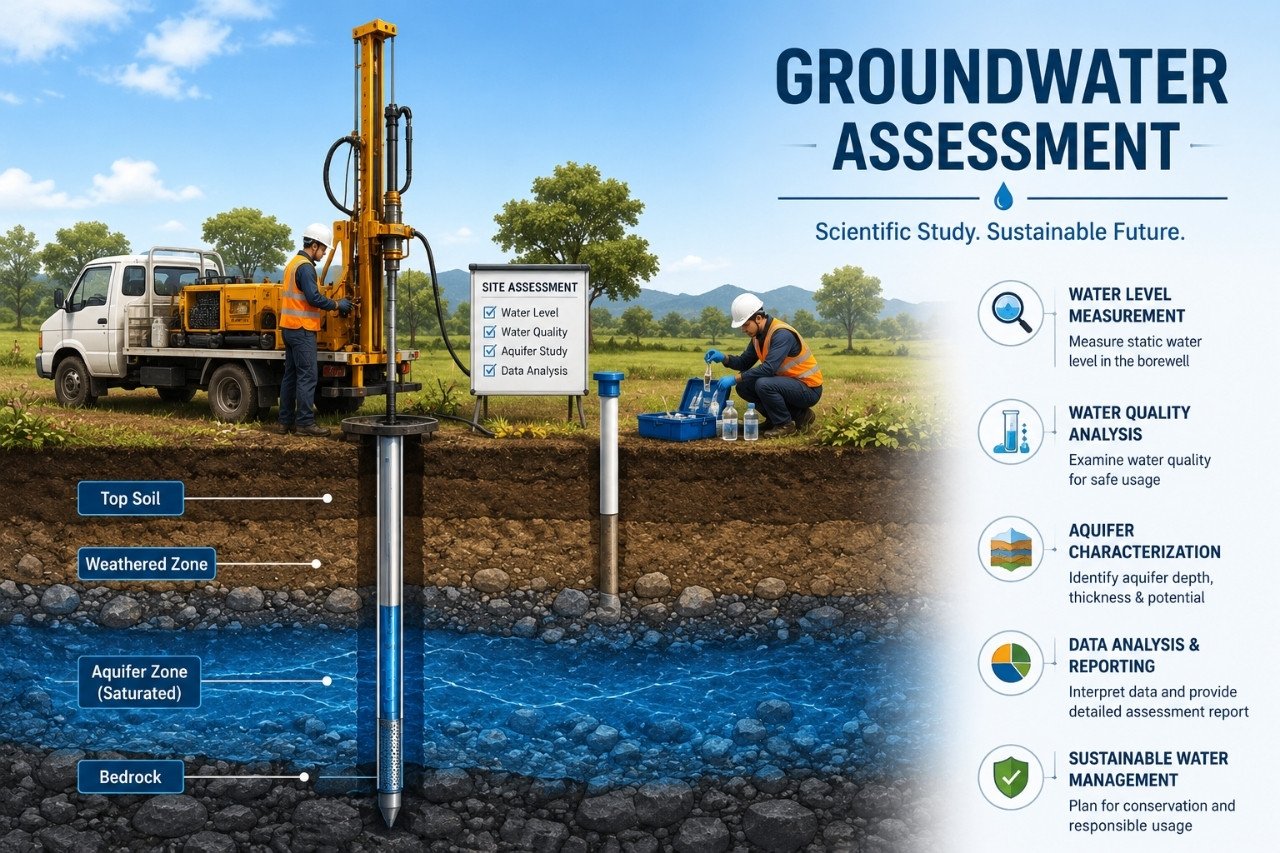
- Missing technical reports. Larger users are expected to submit a hydrogeological assessment that explains the aquifer, the depth to water and the effect of pumping on nearby wells.
What the department actually checks
Officers want to know three things. Is the area already under stress? Is the requested quantity reasonable for the activity? And will the applicant put something back through recharge, metering and monitoring?
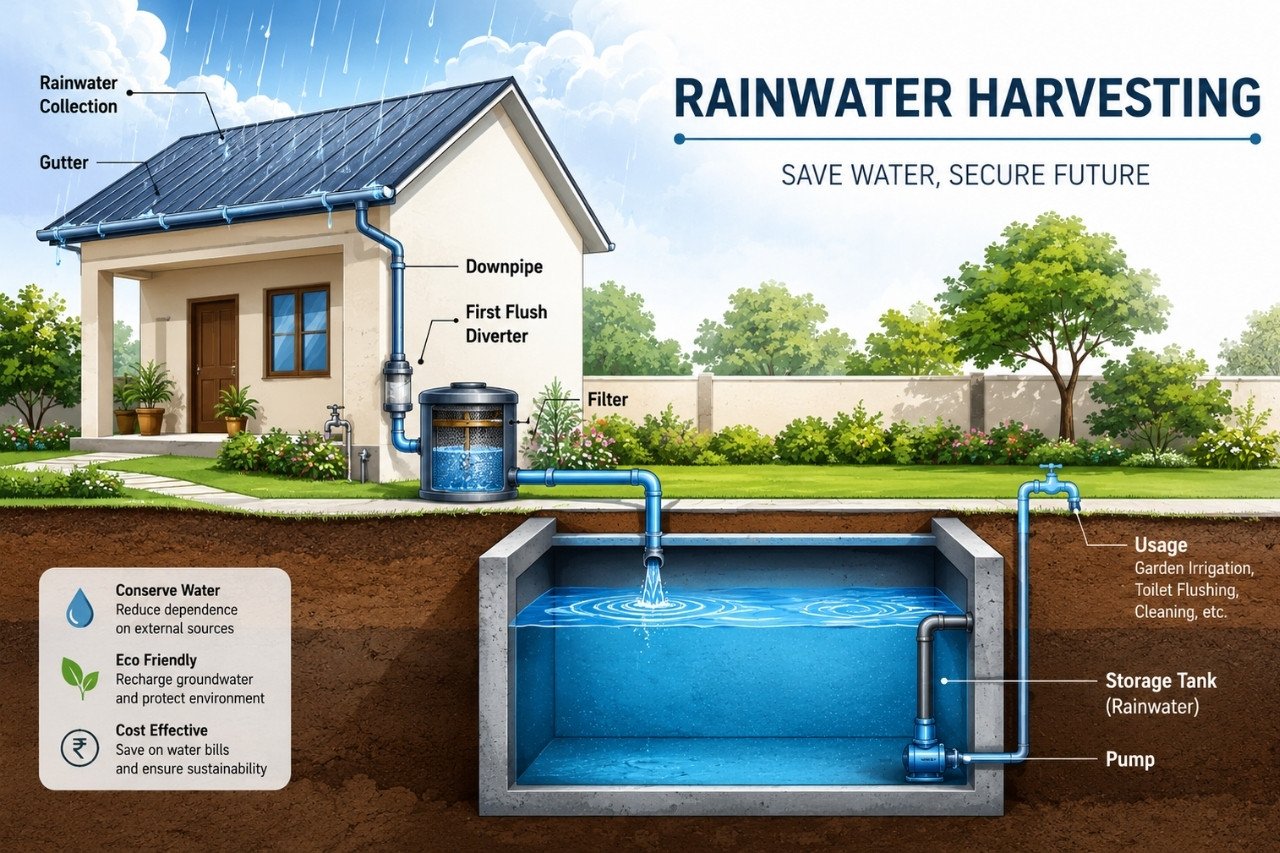
Blocks in UP are classified by how heavily their groundwater is used, and an application in an over-exploited block faces far more questions than one in a safe block. A unit in western UP, where water tables have been falling for years, should expect conditions on recharge structures and a flow meter on every bore. Plan for those costs from the start rather than treating them as a surprise at the end.
Small habits that save months
Keep one person responsible for the file. When the plant manager, the accountant and the architect each upload a different version of the site plan, the department will reasonably ask which one is real.
Photograph the borewell, the meter and the recharge pit before the inspection, not after. Keep the electricity connection details of the pump handy because they are often used to cross check usage. And read the conditions printed on the NOC when it arrives. Several of them carry deadlines, and a missed piezometer reading next year can cause more trouble than the original application did.
A word on timelines and expectations
Business owners often ask how long the UP Ground Water Department takes. The fair answer is that the department’s own timelines are only part of it. The larger part is how many rounds of queries a file goes through. A clean file with a sensible demand, a matching site plan and a proper technical report can move through scrutiny and inspection in a reasonable time. A file that needs three rounds of corrections can take several times longer, and each round resets the clock.
It also helps to plan the order of approvals. Many projects in UP need factory licences, pollution board consents, building plan approval and fire clearance at roughly the same time, often through the same Nivesh Mitra login. The groundwater file tends to get attention last because it looks simple. It is better to start it first, since its outcome can affect the water design that the other approvals rely on.
Finally, think about renewals from day one. Keep a folder, physical or digital, with the NOC, every meter reading, every piezometer record and photographs of recharge structures after each monsoon. When renewal comes, the department will want to see that the conditions were honoured. A tidy folder turns that conversation into a formality.
Also read
Talk to Neer
Neer is an accredited consultant from CGWA and has handled groundwater work since 2000, including files with the UP Ground Water Department for industries, hospitals, schools and housing projects. If you are not sure whether your site needs registration or a full NOC, ask us for the free consultation for NOC applicability. Call +91 92138 90505 or +91 99715 57488, or write to co*****@*****co.in.