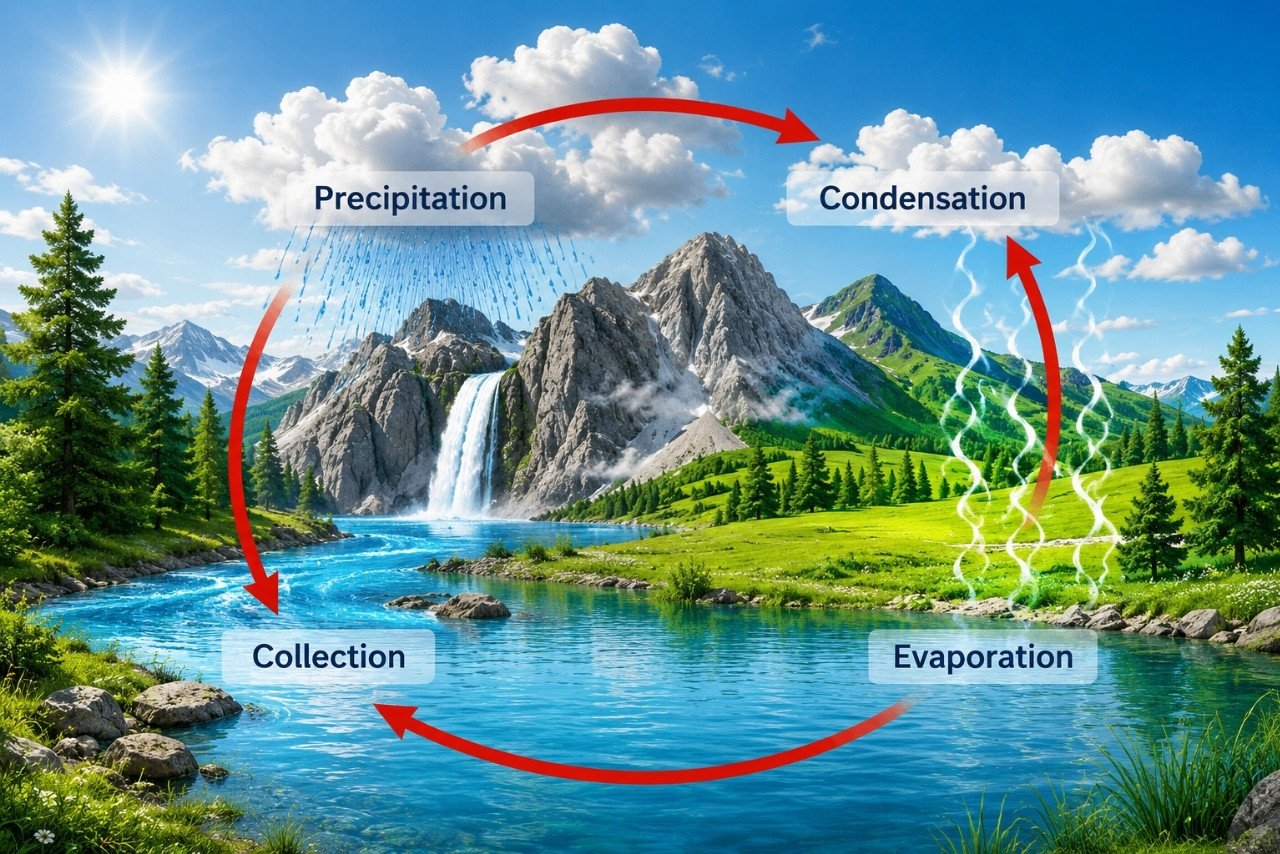
[vc_row][vc_column][vc_column_text]Rainwater harvesting techniques have already been devised and used since ancient times. These were implemented at the community level in areas where rainfall is the only major source of fresh water, mainly in Rajasthan and Madhya Pradesh. In Southern India, rainwater harvesting systems are integrated into their architecture in the form of small ponds/tanks for each house and temple tanks.
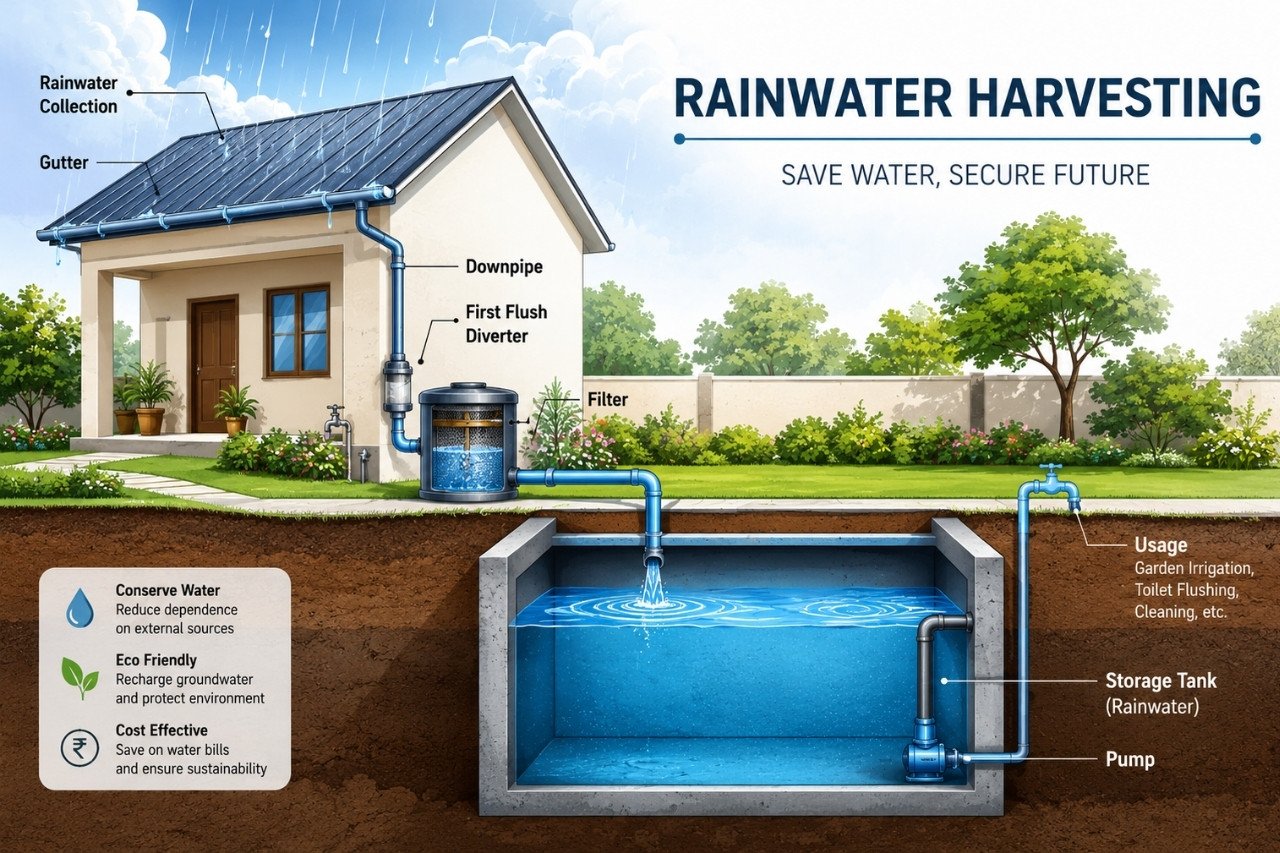
The basic rainwater harvesting system is more of a plumbing job than a technical job, as all the outlets from the buildings’ terrace are connected through pipes to an underground tank that stores water or a dug well, which serves the purpose of recharging wells and borewells.
Advantages of Rain Water Harvesting System
- Reduces the dependency on groundwater. Hence potable water is available even during droughts, floods, etc., and is particularly useful where the groundwater is contaminated with chemicals like pesticides, fluoride, etc.
- These are easy to construct, easy to maintain, and easy to operate, and the investment is also less.
- It reduces soil erosion and conserves groundwater.
- Roof Top rainwater harvesting, the roof becomes the catchment area, and the rainwater is collected from the roof of the house/building.
[/vc_column_text][/vc_column][/vc_row][vc_row][vc_column][vc_column_text]
Treatment of Rainwater
The chemical treatment of stored rainwater is to ensure that it is not re-contaminated. The most common types of treatment are –
i) Chlorination: Chlorination can be carried out using bleaching water and/or chlorine tablets, readily available commercially. A single 0.5g ‘halazone/chlorine’ tablet can disinfect about 20 liters of water. Bleaching powder has multiple applications; it can also be used to disinfect other parts of the RWH system and is generally available in powdered form.
ii) Boiling: Boiling is a very effective method of purification and very simple to carry out. Boiling water for 10 to 20 minutes is enough to remove all biological contaminants and remove the water’s hardness. But this is suitable for small-scale RWH systems only as a large amount of water needs a larger amount of fuel for boiling.
iii) Direct sunlight: This can also be used to kill many harmful bacteria in water by exposing it in clear glass or plastic bottles for several hours to UV radiation which is a part of sunlight. The water must be clear from turbidity, and clear weather is the prerequisite for this treatment. Most of the microorganisms are killed by UV rays and the heat generated from exposure to sunlight.
Do’s and Dont’s of the RWH system.
The following precautions must be taken to ensure that the RWH system operates at maximum efficiency:
- The catchment area, i.e., the roof/trace used for harvesting, should be clean, free from dust, organic matter such as vegetation, etc., and should not obstruct the rainwater flow. They should be appropriately cleaned before teeing the monsoons. This increases the service life of the filter media used in the different components of the RWH.
- Provide gratings at the mouth of each drainpipe on terraces to trap leaves, debris, and floating materials, as these may damage the filter media
- The first rain separator should be provided to flush off the first rains due to the potential risk of acid rains and contaminants from the roof/terrace.
- Polluted water, such as water containing soap and other cleaning products, should not be used to recharge groundwater. Groundwater should only be restored by rainwater.
- Before recharging, it should be made sure that all the components of the RWH are in working order and that there are no obstructions and waste material in the storage and settlement tanks. Filter media should be cleaned before every monsoon season.
- During the rainy season, the whole system (roof catchment, pipes, screens, first flush, filters, tanks) should be checked before and after each rain and preferably cleaned after every dry period exceeding a month. At the end of the dry season and just before the first rain shower is anticipated, the storage tank should be scrubbed and flushed off all sediments and debris.
[/vc_column_text][/vc_column][/vc_row]